From the fastness of my French wilderness I am working to launch a range of kits for platemaking using non-toxic methods. The first kit will launch via Kickstarter in September.
From the fastness of my French wilderness I am working to launch a range of kits for platemaking using non-toxic methods. The first kit will launch via Kickstarter in September.

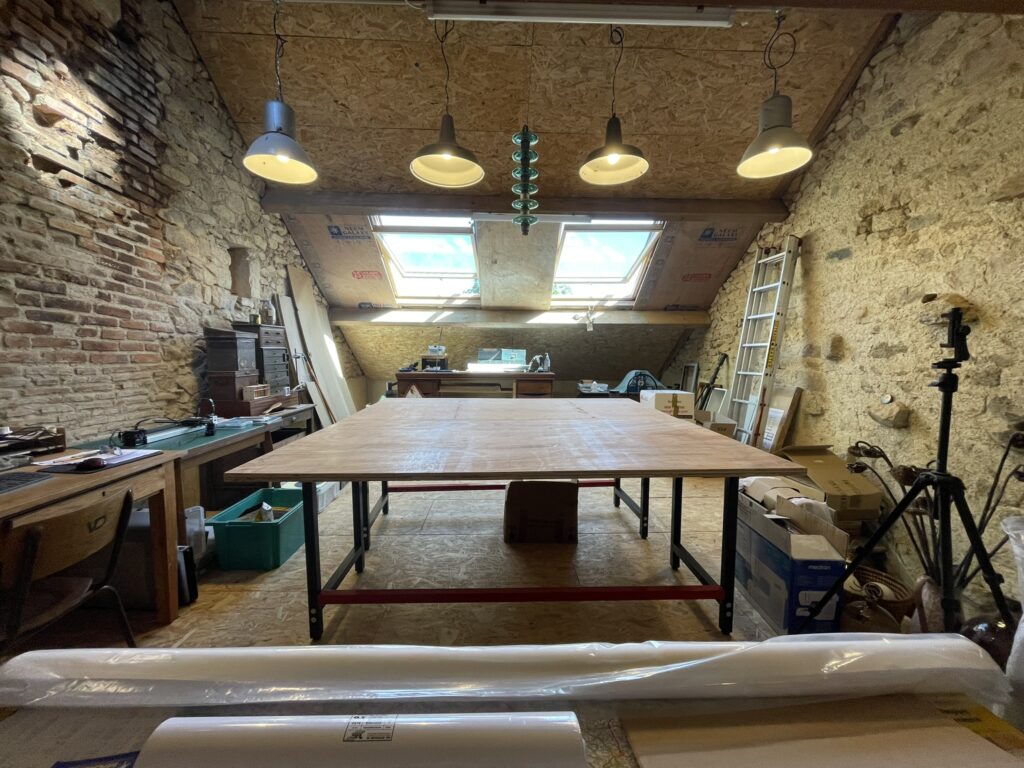
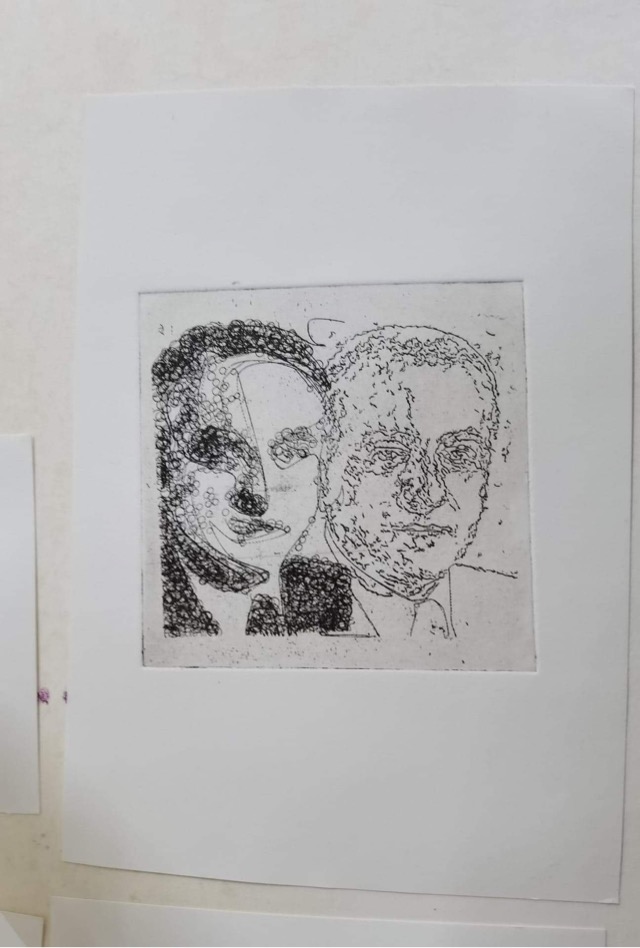
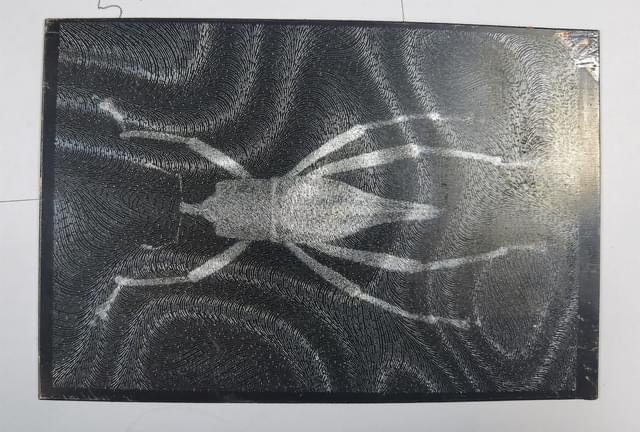
At the end of 2025 I went to Spain, to Gran Canaria, to undertake a two week residency with Alfonso Crujera, staying on site and learning the process of electro etching in his beautiful workshop high above the coast.
I chose to undertake this residency because, having moved to a very remote part of France to build an experimental print shop, I didn’t want to build a traditional acid based system with all the problems and toxic materials that that implied. I also knew that I would have problems with supply of chemicals at my new studio.
In addition to those problems, I was intrigued by Alfonso’s work and considered it an opportunity to create a facility which would allow me to teach others and to combine etching by this process with other techniques.
My time at Alfonso’s studio was fascinating. We worked day by day on creating experimental plates. I was initially unsure as to how effective this process could be but I was soon converted.
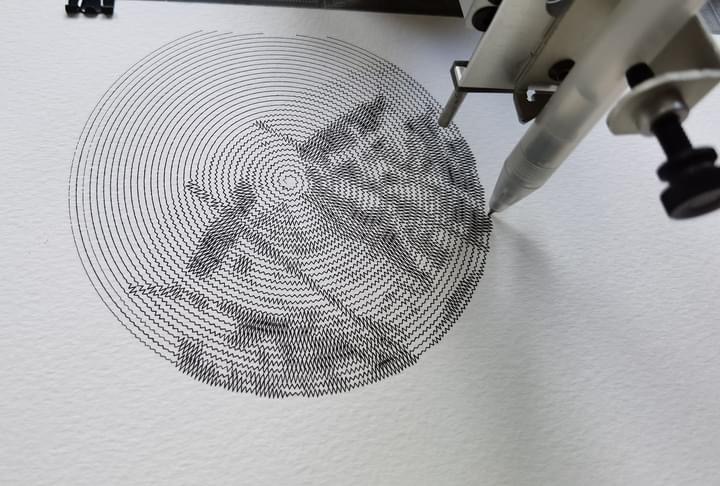
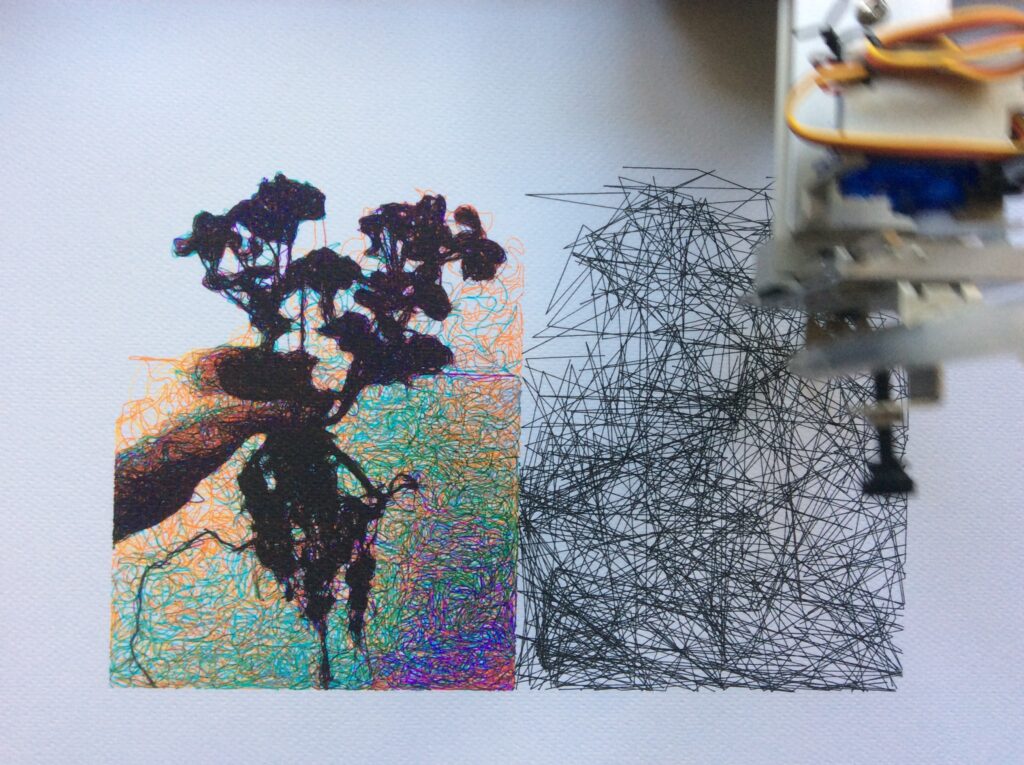
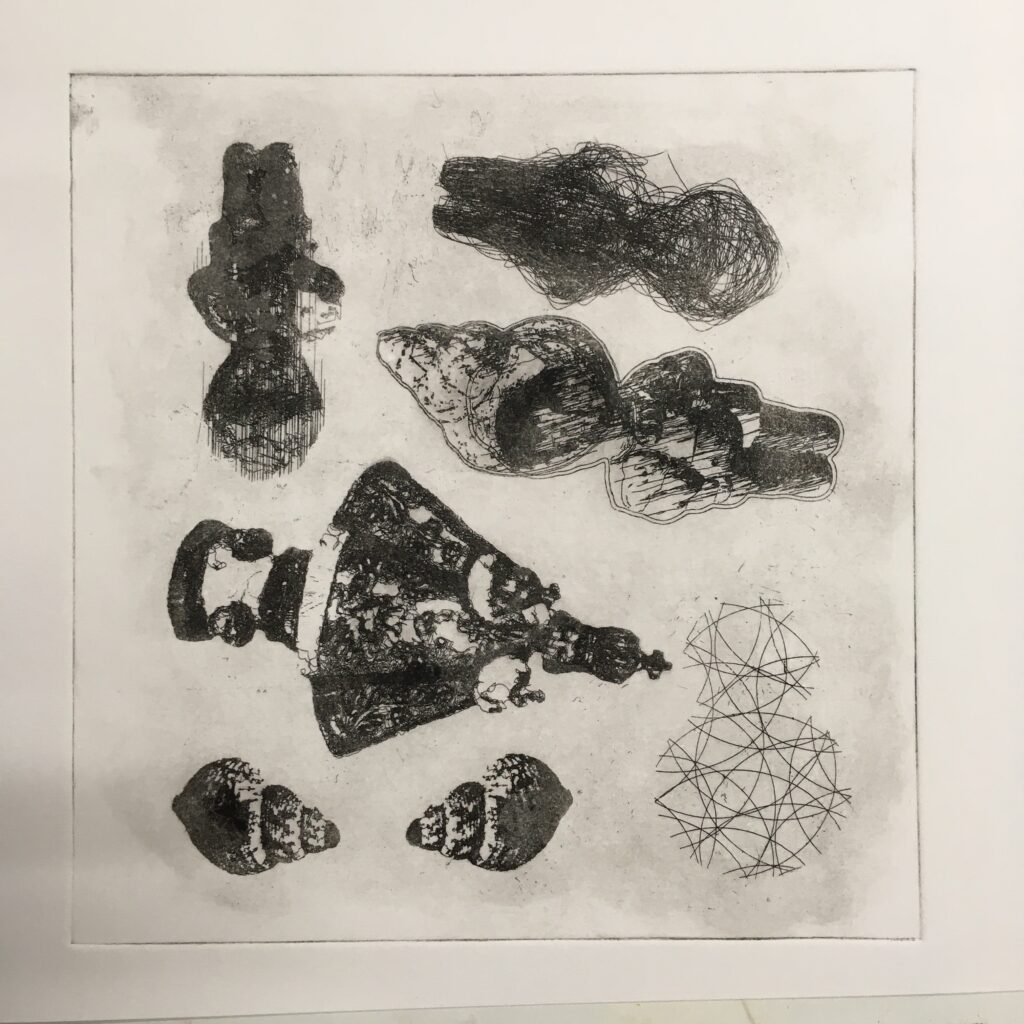
In addition to wanting to learn this technique and experiment with it, I was keen to continue my experiments with my AxiDraw machine plotter and the marking of plates through a ground. I took the whole machine to Gran Canaria with me, the first time it had travelled. The experiment was successful and I cut a variety of experimental plates in the studio. I was also pleased that Alfonso wanted to experiment alongside me with his own images and I set up and made a variety of plates for him too.
Since I returned I have been working on the long complex process of converting part of my property into usable space for printimaking and other activities. I am now approaching the end of the first part of this process and will soon have a small printshop set up which will use electro etching. I hope to introduce many people in my part of the world to this brilliant and safe process and to continue with my own experiments.
https://crujera.com/residencias/artistas-residentes-2019/ivan-pope-noviembre-2025-francia-uk/


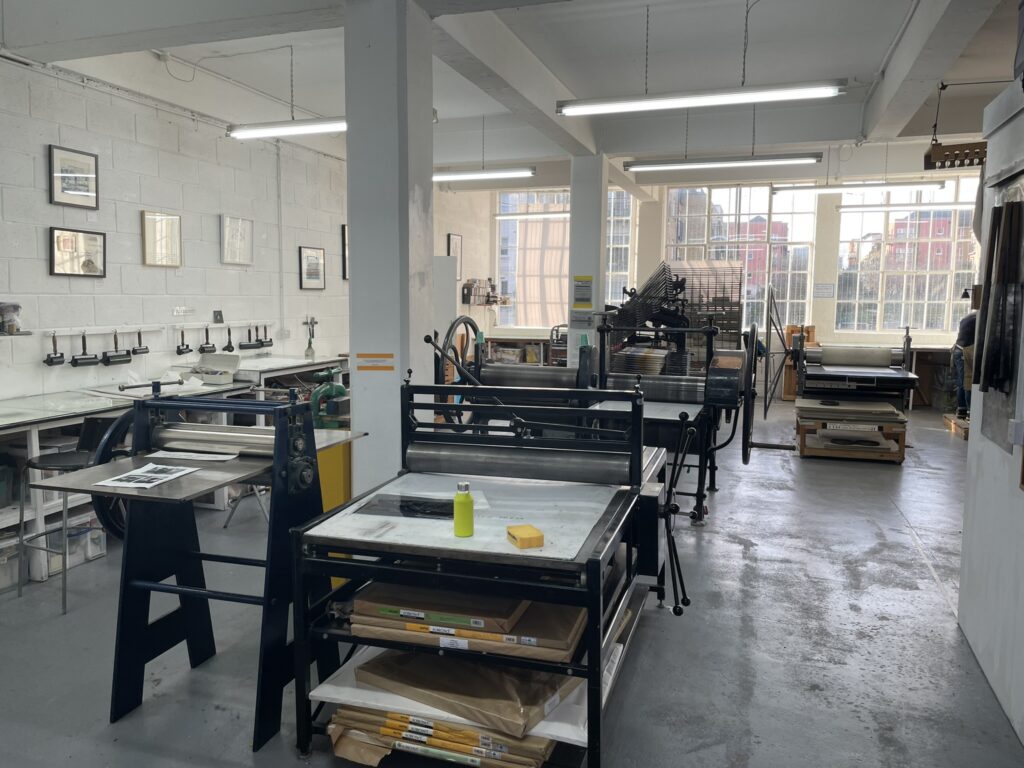
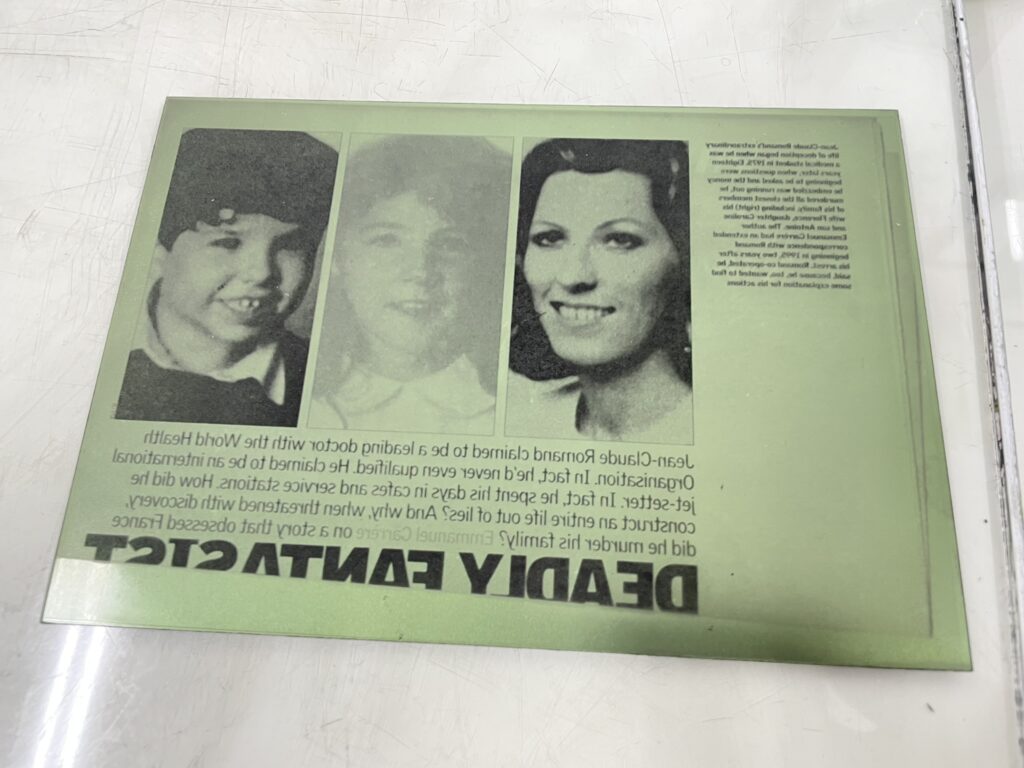
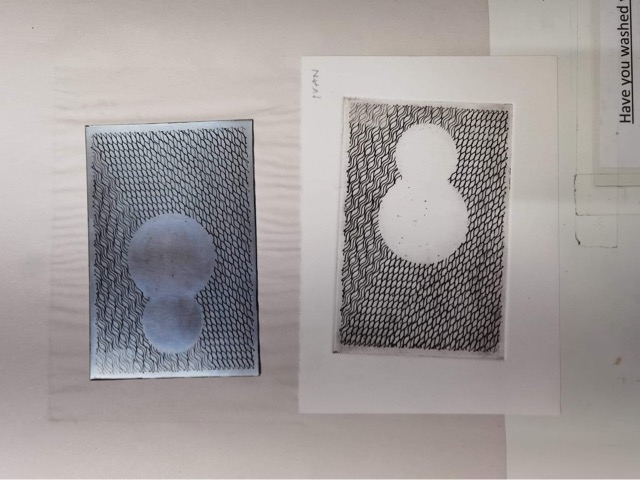
At the end of December I did a one day one-to-one course in Photopolymer printing at East London Printmakers with Rebecca Holmes. I wanted to get my head around using photopolymer plates in my printmaking, something that I’d read a lot about but had difficulty understanding how it worked. Photopolymer is a commercial printing process where an exposed plate can be washed out in warm water, removing the need to etching acids. It offers huge potential for platemaking from a variety of sources. For my teaching day I took along a couple of images, one from a newspaper and one drawn by my Axidraw machine. I had a great day and Rebecca was a brilliant teacher. We made and printed using two different kinds of plates and the results were fabulous. Now I’m gearing up to make some more plates of my own to push my experimentation.
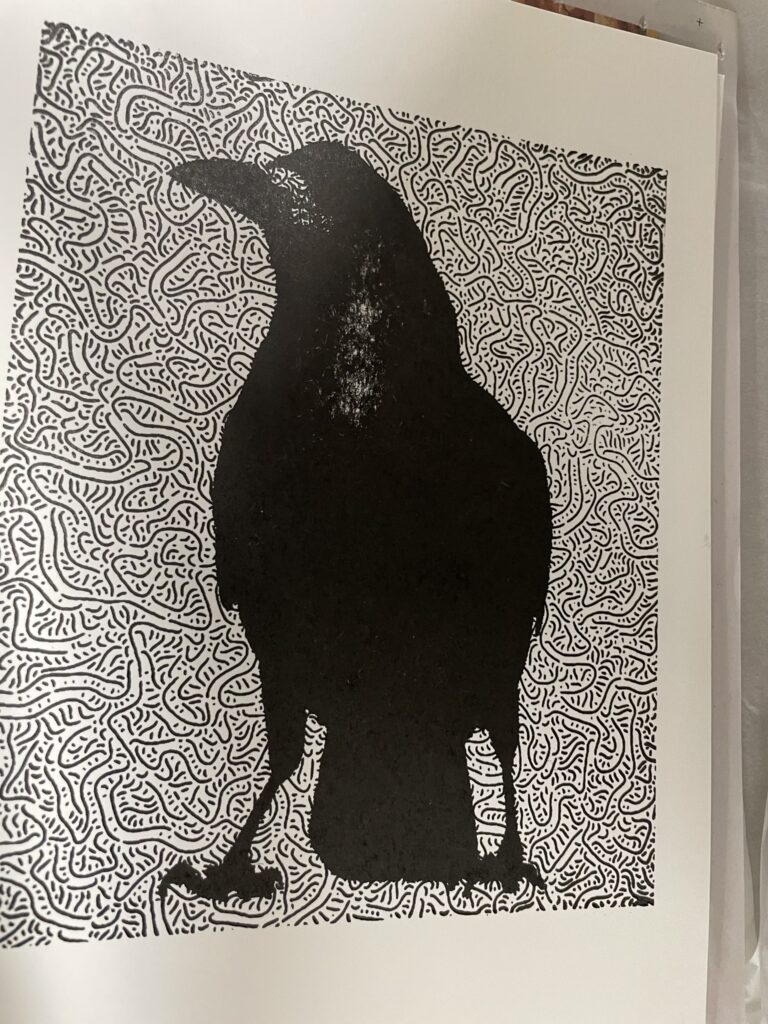
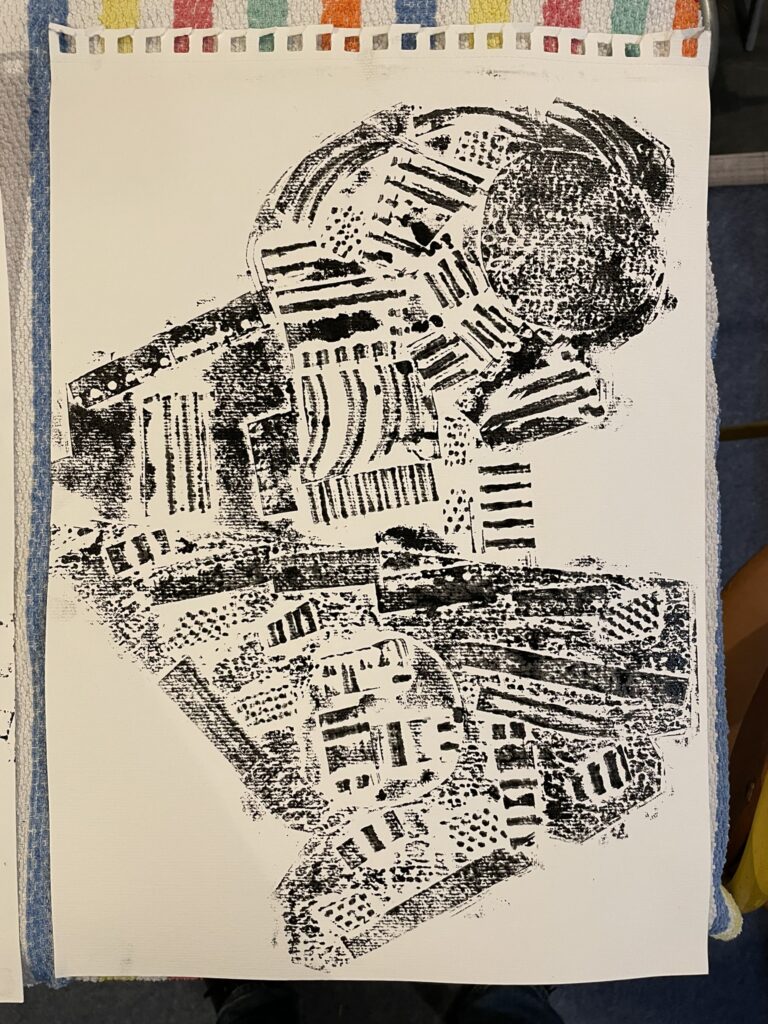
I took a short lesson in collagraph printing. I’d seen it around but had no idea what it was. Turns out you make a plate by sticking textured material onto a ground (from colle, French for glue). People get very creative with this but I decided to stay simple. When asked to bring an image along I chose an old brutalism calendar and I used a combination of two images to make this abstract. I cut up and used plastic packaging.
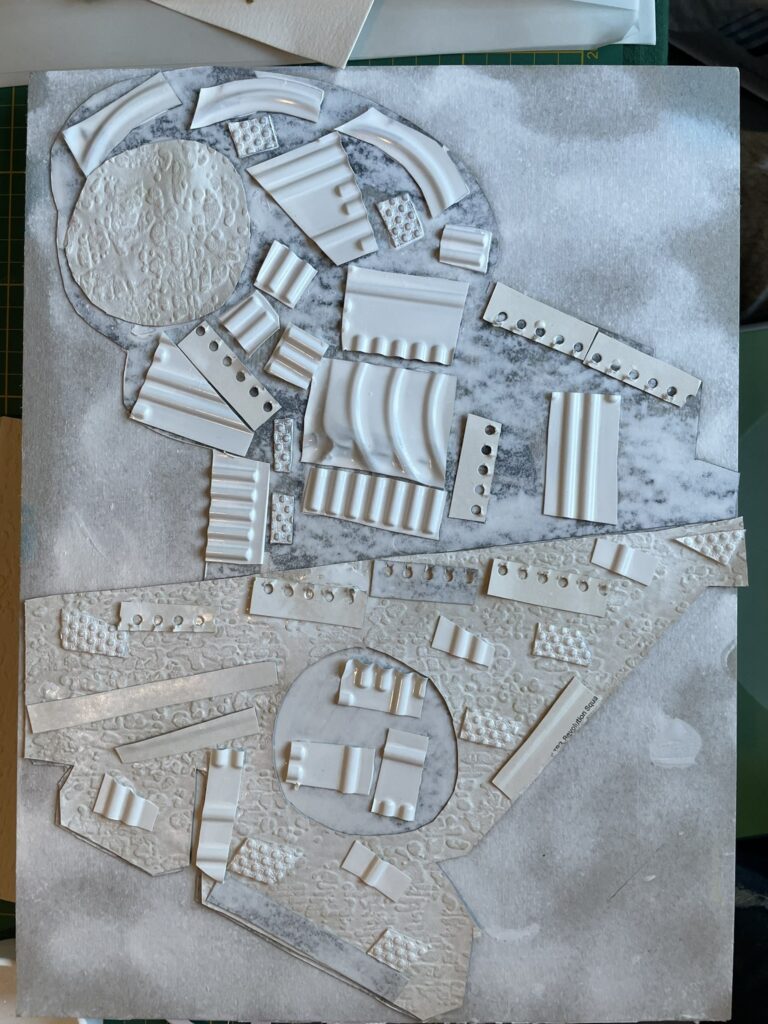
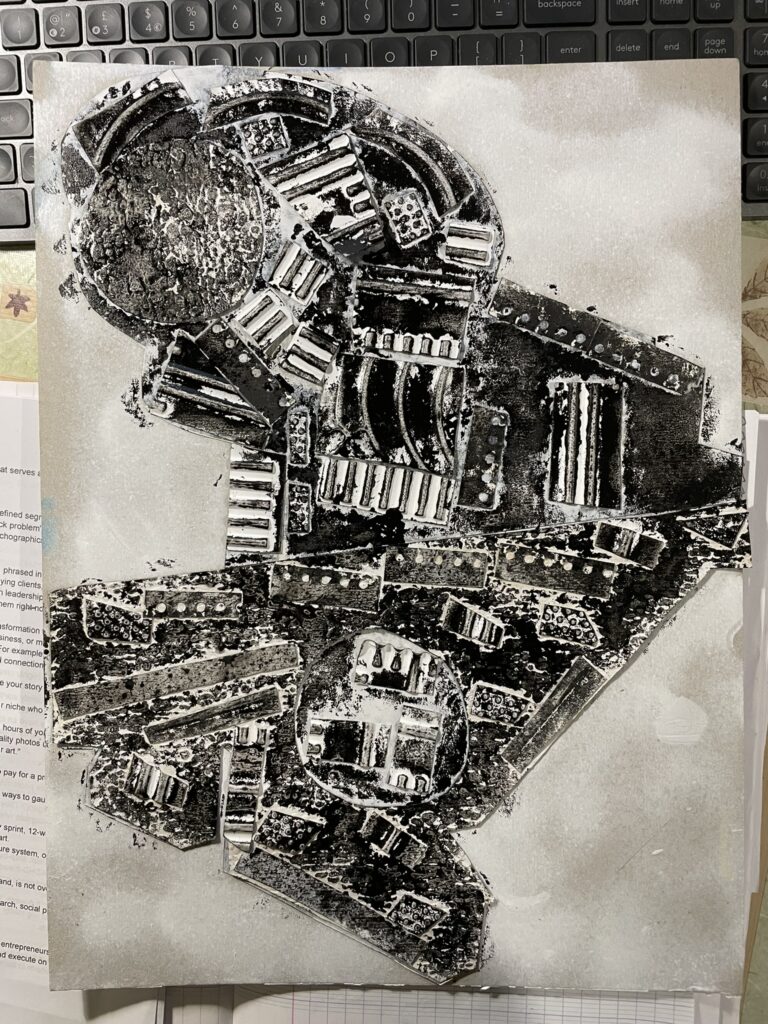
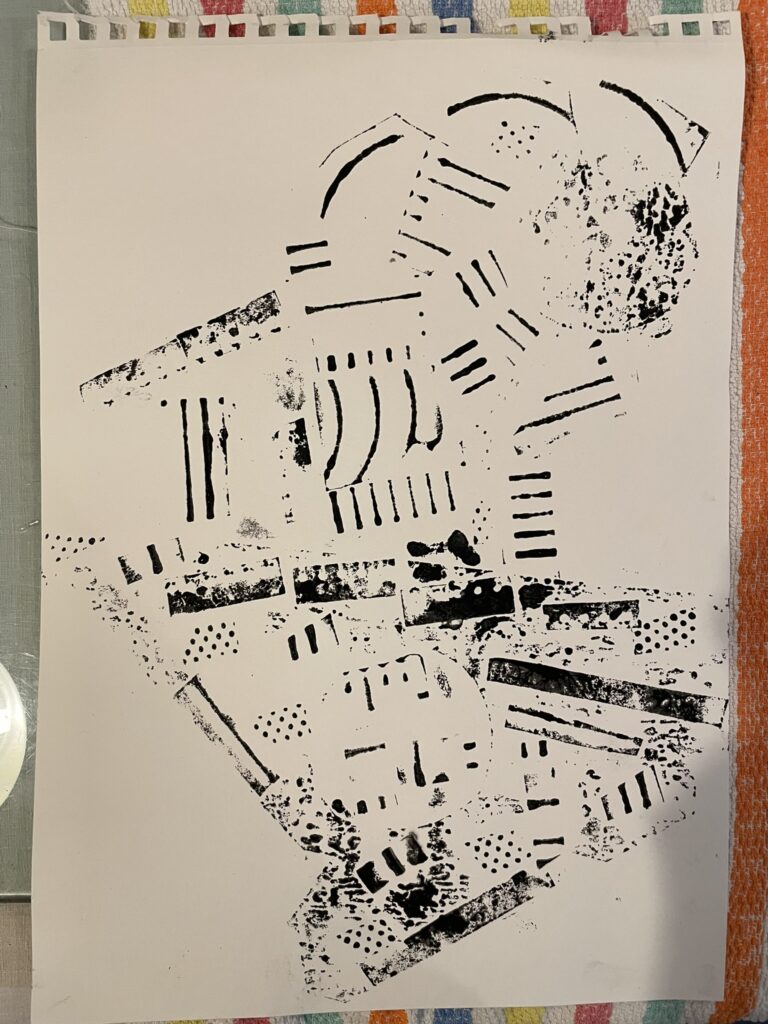
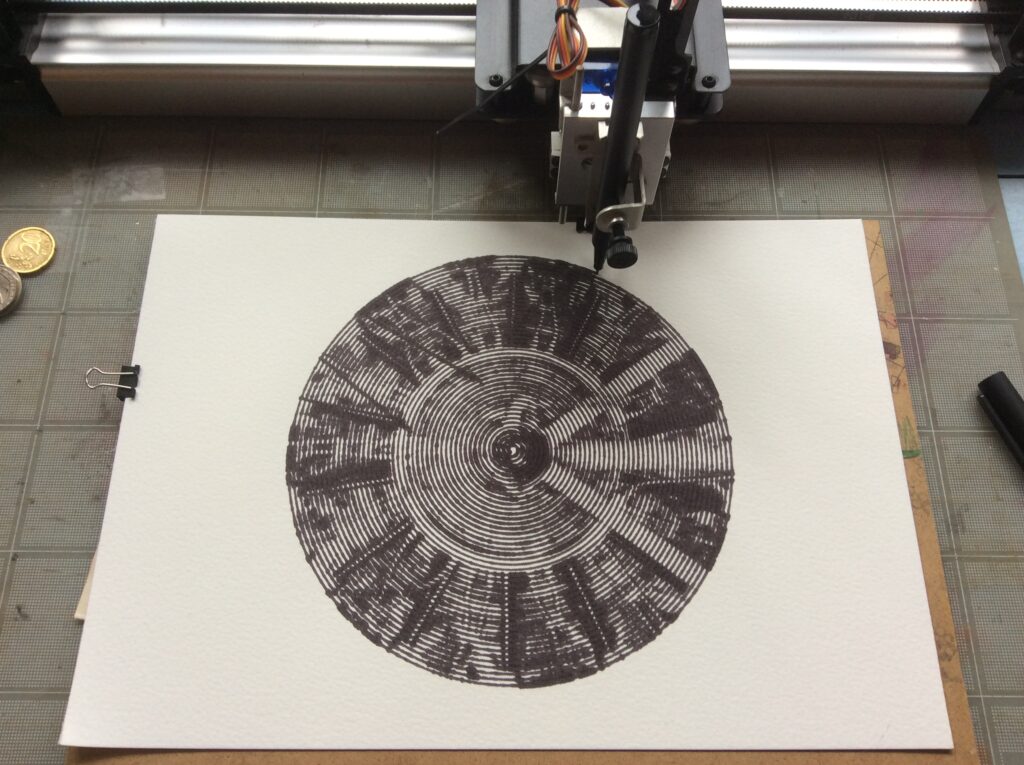
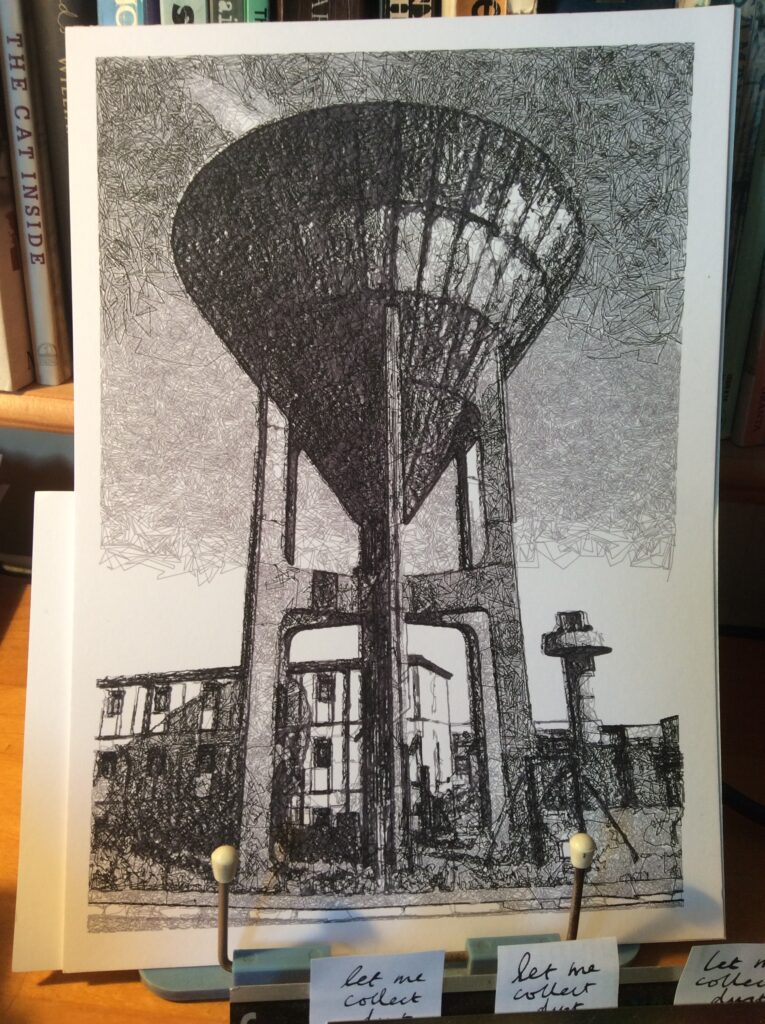
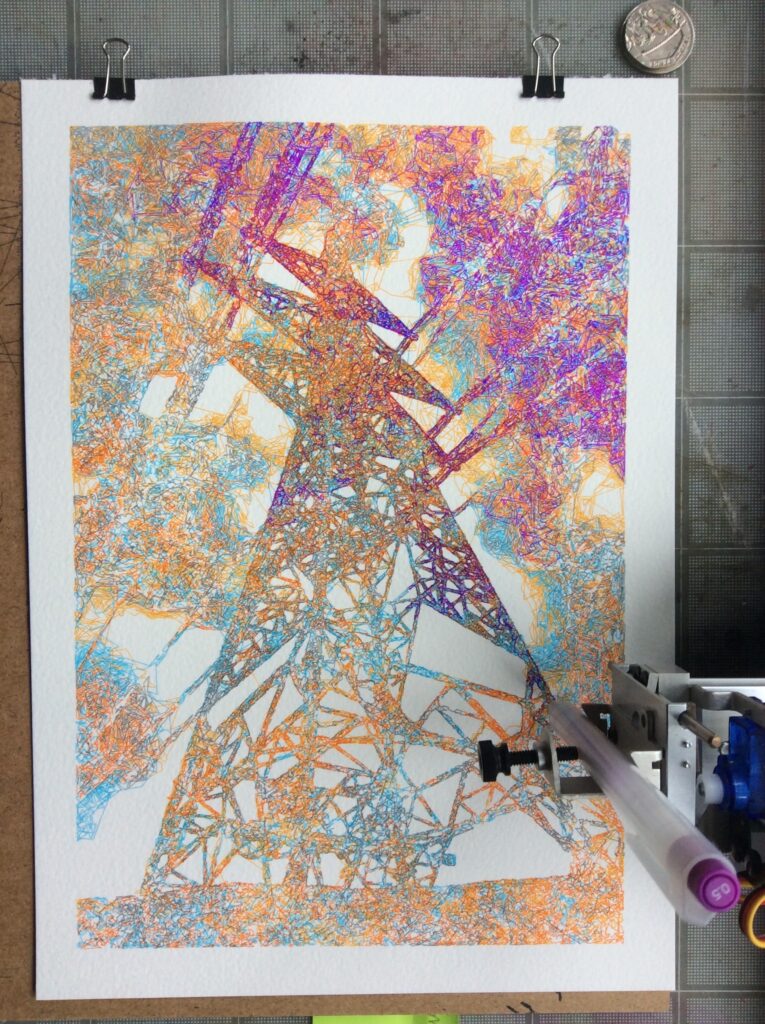
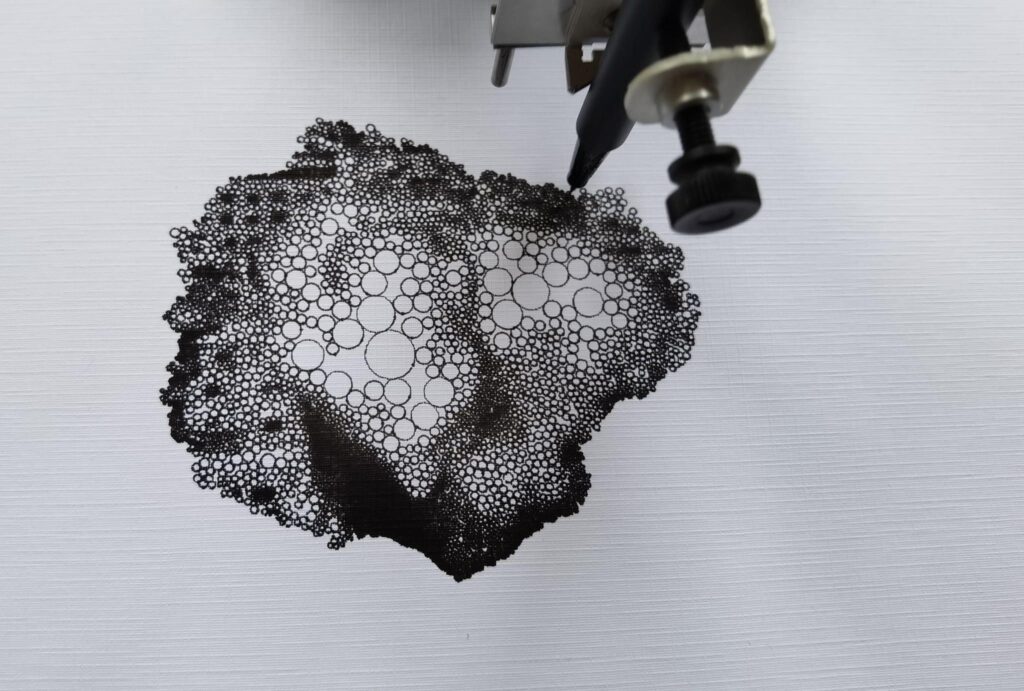
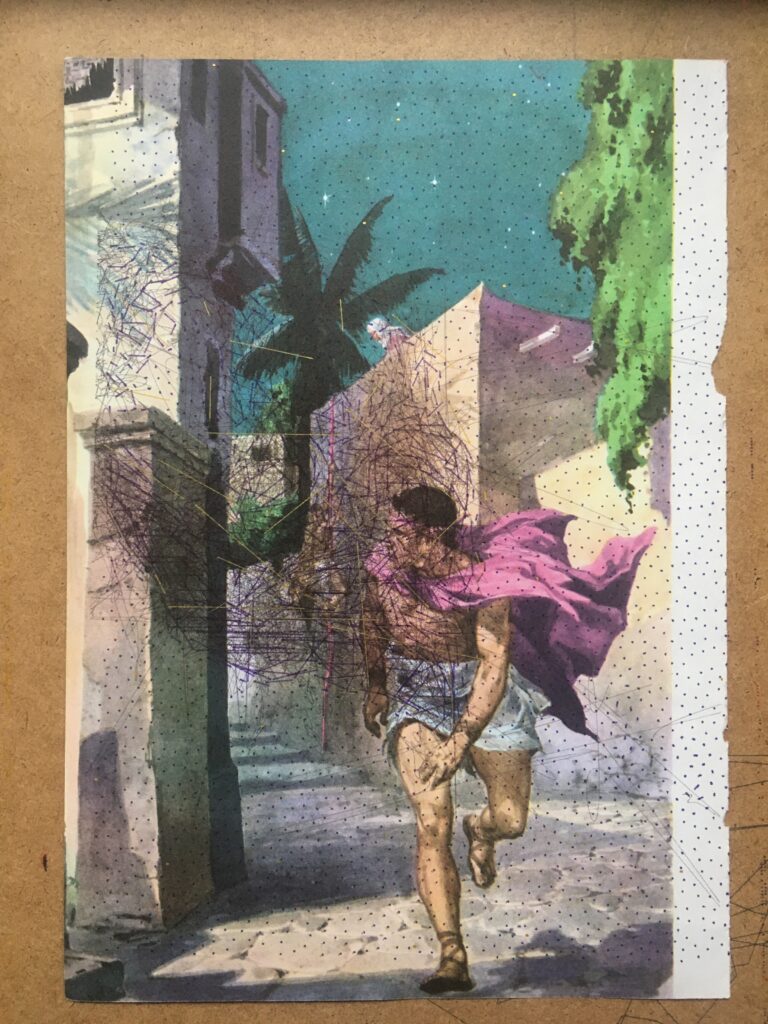
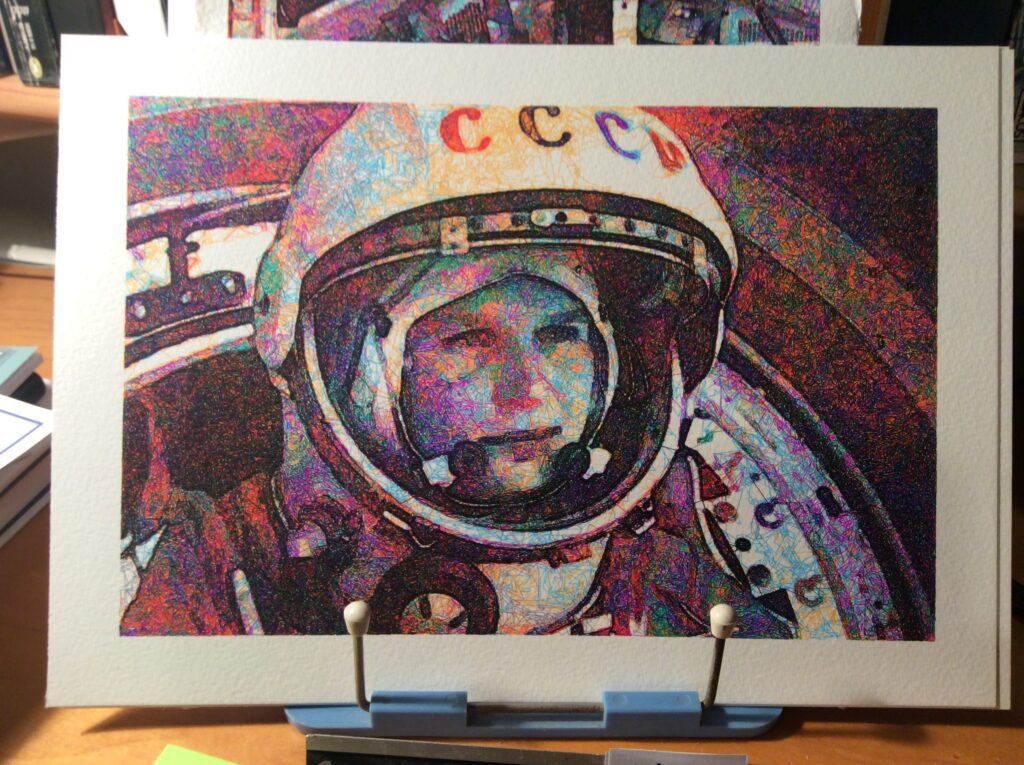
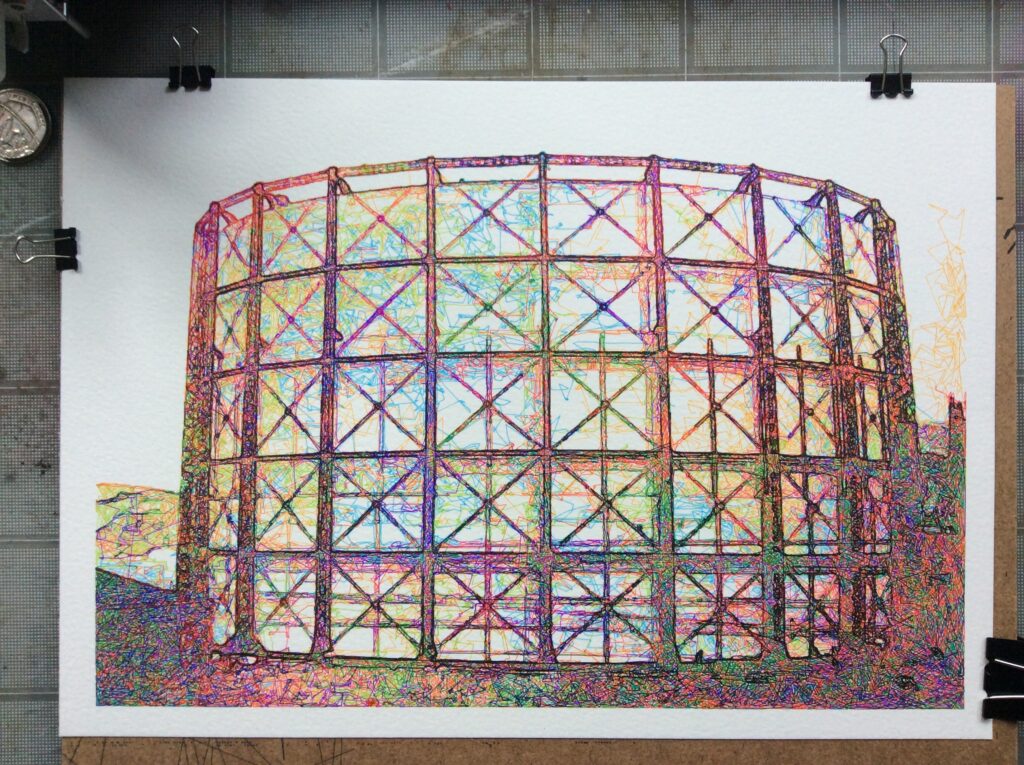
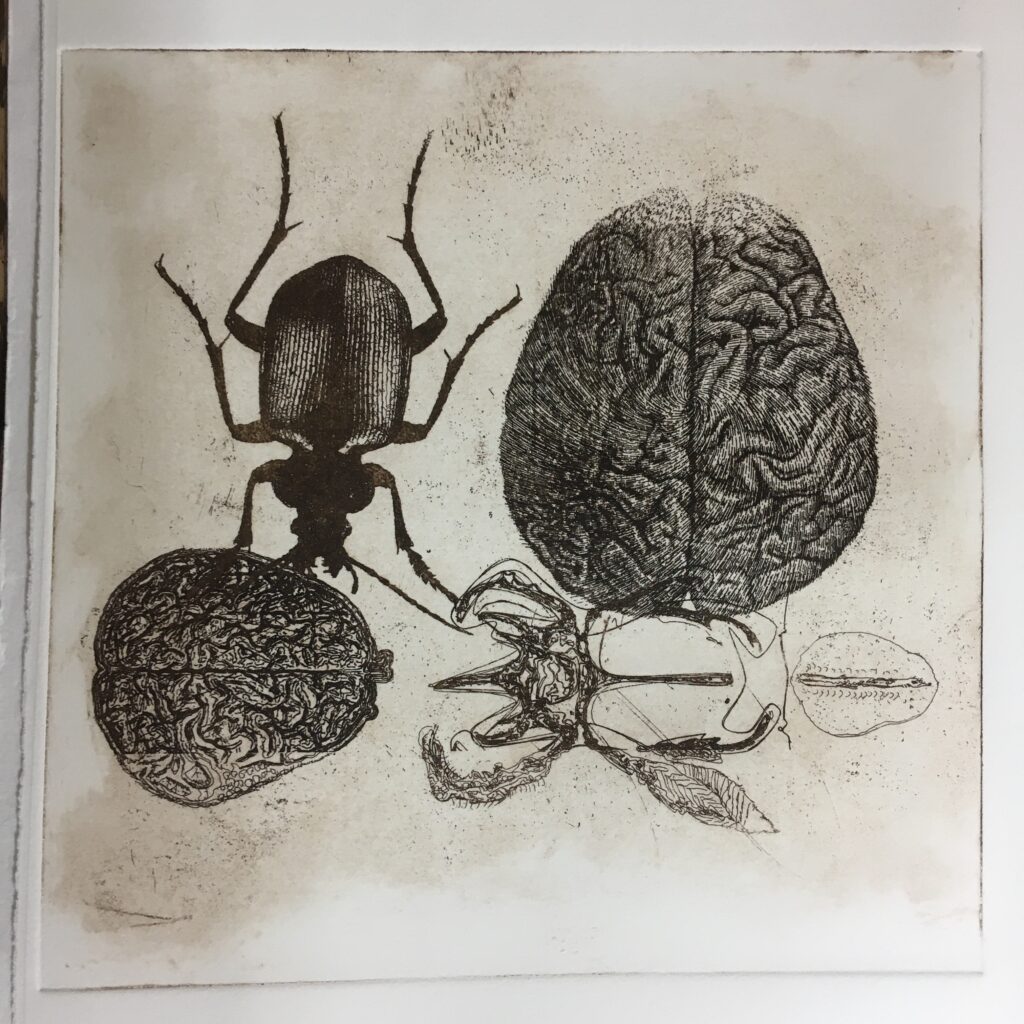
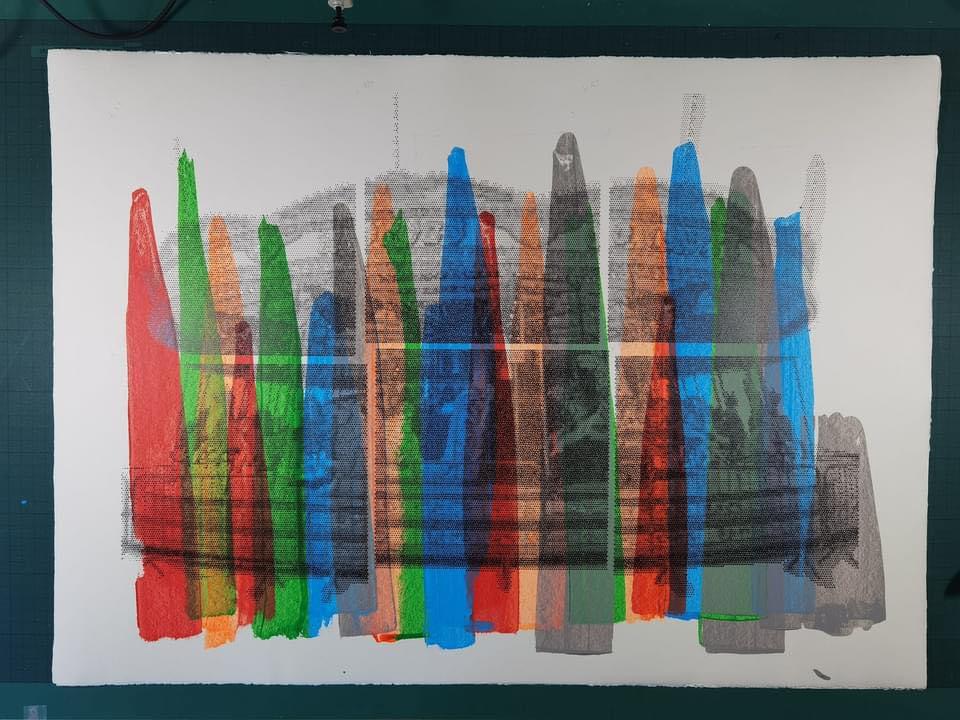
I’ve been making a lot of work with my AxiDraw. Actually, the work is made between found and created images, two or more lots of software, output with the AxiDraw hardware to paper and printmaking processes such as etching and screenprinting.
It’s a complex but lovely process with infinite potential. I would like to teach and watch others take it into their practice.
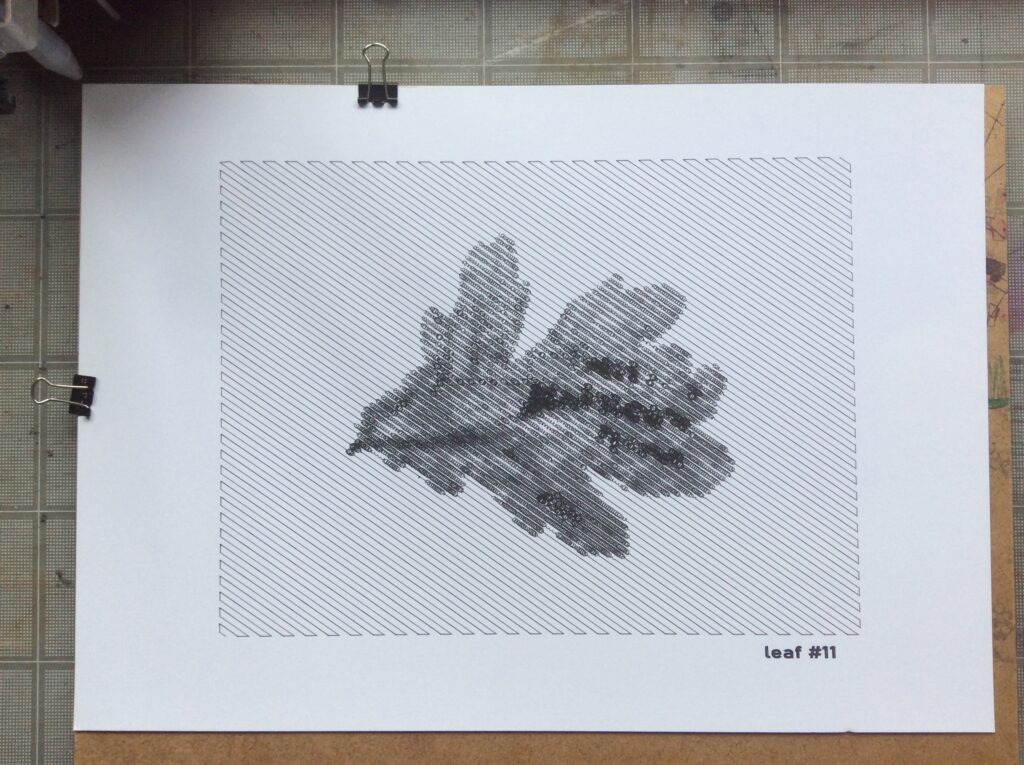
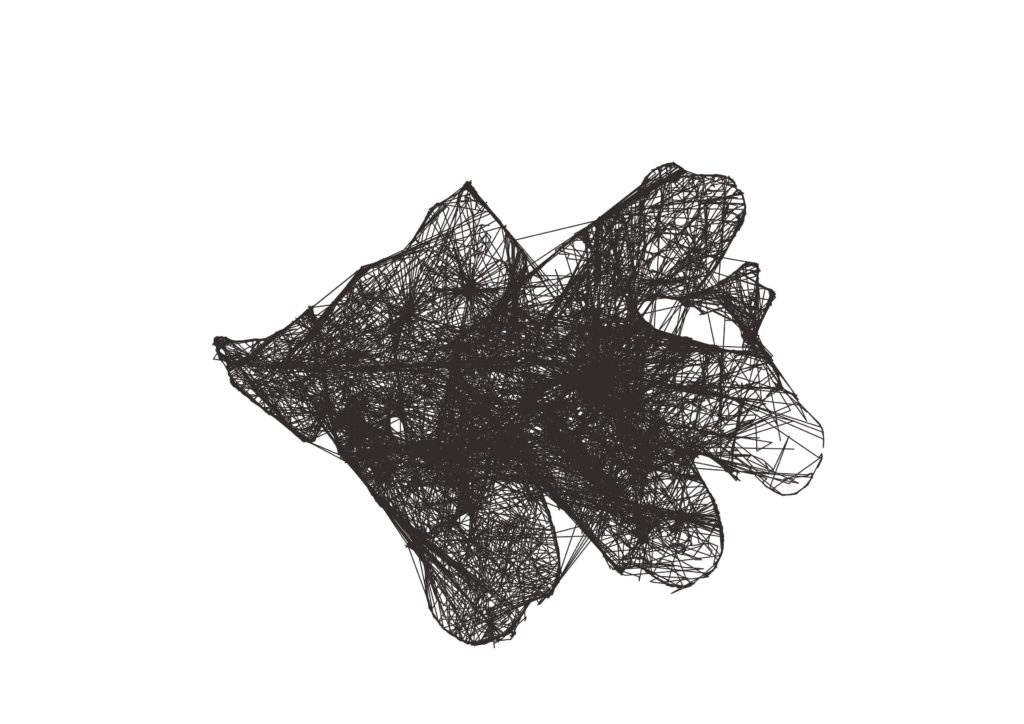

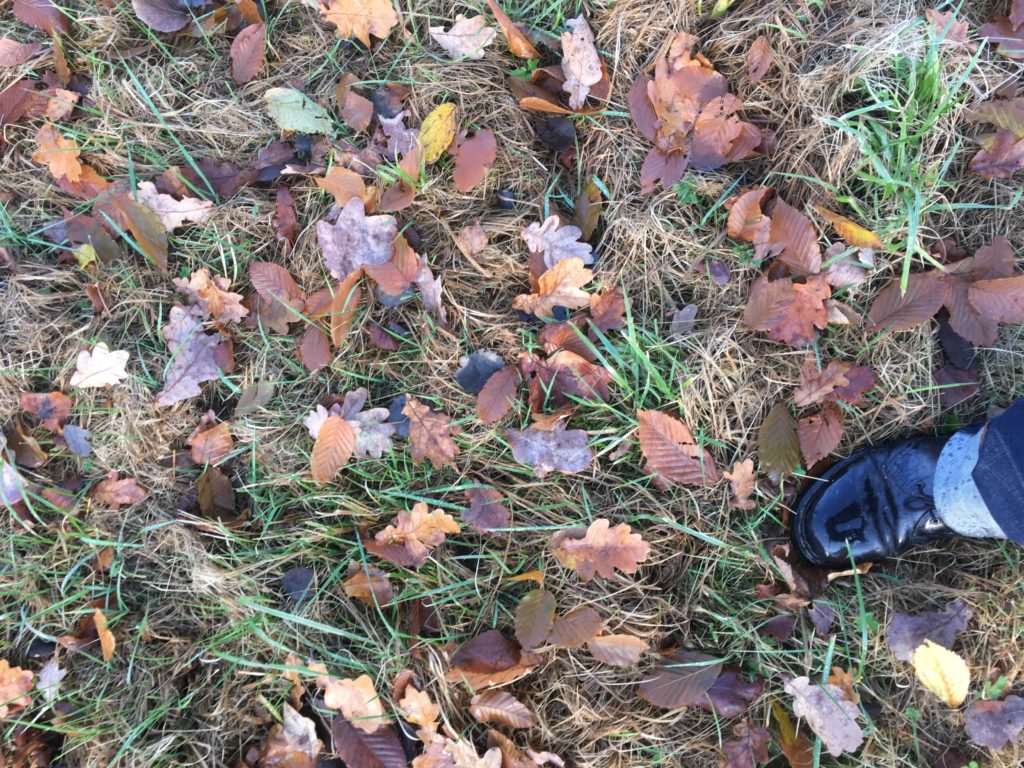
From my doctoral research a project is emerging, 100 leaves from Auschwitz.
On Holocaust Memorial Day 2020 I circumnavigated Birkenau.
On Armistice Day 2021 I collected 100 leaves from Birkenau.
I’m making a memorial chapbook for Holocaust Memorial Day 2023.

When creating an image in the Midjourney AI program it is possible (and possibly more interesting) to record the process by which Midjouney thinks the image into being.
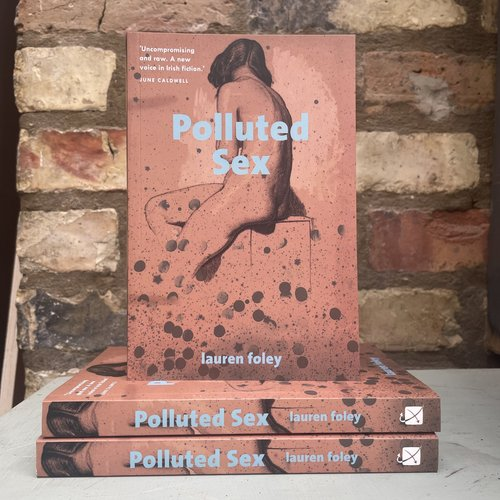
I spend a lot of time (and money) looking for books that step outside conventional structure. I know there are a lot of them around but at the same time, there is no genre, no identifying marks that lead to books of this nature. I read across fiction and non-fiction and poetry, hoping for something that mixes them all together into something new.
So it’s nice to come across a book that wears this sort of heart on its sleeve and which gives me some more clues to the language of this space.
‘Formally experimental – mini plays, time-stamped fragments, prose-as-prayer – in work that’s political, comic and genuinely original.’
‘Foley joins a cohort of contemporary authors whose work seems dissatisfied with narrative conventions. What happens when we blow them open?’
Ordered in confidence but not read yet.
The allure of seeing the world from above is so closely associated with the discipline of geography that some degree programs even suggest that students who “prefer the window seats on airplanes” might be potential future geographers. And while there are many reasons to be cautious about the totalizing perspective of the “God’s-eye view,” aerial images still nevertheless invite us to observe spatial structures both grand and intimate, and to interrogate how the patterned ground on which we live came to take on its visual form.
Some of the most interesting aerial observations emerge from repetition in the landscape—both built and natural forms that occur time and time again. When I was working on developing our Insizeor tool, I tried a few different processing techniques for clipping out sections from an aerial image layer. Using one of these techniques that I didn’t eventually need for Insizeor, I started to experiment with what it would look like if I created rapid animations based on repetitive features.
https://www.leventhalmap.org/articles/birds-eye-cards/